Solar Innovations That Will Reshape 2026

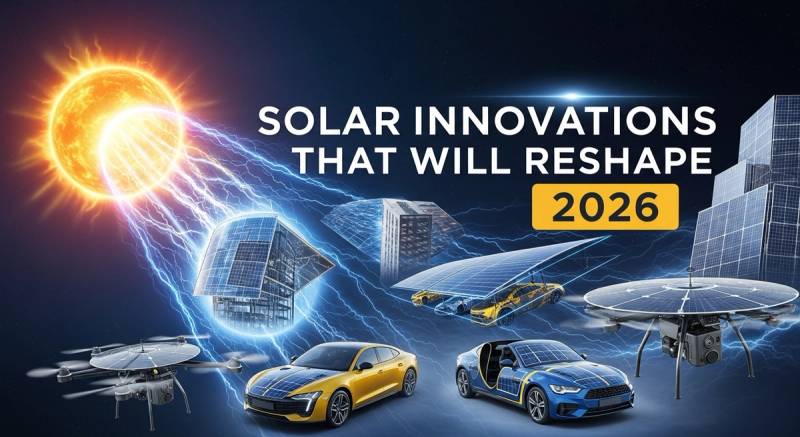
The solar energy landscape is undergoing a seismic shift, with breakthrough technologies poised to redefine how we harness the sun's power. As 2026 approaches, innovations in photovoltaics, storage, and integration are accelerating at an unprecedented pace, promising to make solar energy more efficient, affordable, and ubiquitous than ever before. From next-generation materials that bend the rules of physics to smart systems that think and adapt, these advancements aren't just incremental upgrades—they're fundamental reimaginings of solar potential. Let's explore the most transformative solar innovations that will reshape our energy world by 2026.
Revolutionary Photovoltaic Materials
The heart of solar innovation lies in photovoltaic materials, and 2026 will witness the commercialization of technologies that push efficiency boundaries beyond current limits. Perovskite solar cells, once a laboratory curiosity, are now achieving over 33% efficiency in tandem configurations with silicon—surpassing traditional panels. These lightweight, flexible cells can be printed like newspapers, slashing manufacturing costs. Meanwhile, quantum dot technology is enabling "spectrum-splitting" designs that capture sunlight across multiple wavelengths, potentially breaking the 40% efficiency barrier. For deeper insights into perovskite breakthroughs, see our guide on The Rise of Perovskite Solar Cells.
Perovskite-Silicon Tandems
By layering perovskite atop silicon solar cells, engineers create tandem structures that capture different parts of the solar spectrum. This hybrid approach already produces lab efficiencies exceeding 33%, with 2026 projections targeting 38% for mass-market deployment. The result? Panels generating 50% more power per square meter than conventional silicon cells, ideal for space-constrained urban environments.
Next-Gen Energy Storage Integration
Solar's intermittent nature has long been its Achilles' heel, but 2026 innovations will finally solve this puzzle through smarter storage solutions. Solid-state batteries are replacing lithium-ion in solar installations, offering energy densities three times higher and eliminating fire risks. More remarkably, thermal storage systems using molten salts are evolving into compact, modular designs that store heat for days, not hours. Combined with AI-driven grid management, these technologies will enable 24/7 solar power availability. Explore storage breakthroughs in Solar Energy Storage Solutions for 2026.
- Solid-State Batteries: Solid electrolytes replace flammable liquids, doubling lifespan while halving charging times.
- Thermal Reservoirs: Nano-enhanced salt mixtures store heat at 1,200°C with minimal energy loss.
- Flow Batteries: Vanadium redox systems scale from homes to utility-scale without degradation.
Building-Integrated Photovoltaics (BIPV)
By 2026, solar won't just be mounted on roofs—it will be woven into the very fabric of our buildings. Transparent solar films are replacing conventional windows while generating electricity, with companies like Ubiquitous Energy achieving 10% efficiency in prototypes. Similarly, solar roof tiles incorporating perovskite cells are becoming indistinguishable from traditional roofing materials while producing 30% more energy than panels. This aesthetic integration removes the "bolt-on" stigma, making solar a standard feature rather than an add-on. Discover how architects are embracing this revolution in Building Integrated Photovoltaics: The Future of Architecture.
Floating Solar Farms
Water reservoirs and lakes are becoming unlikely solar powerhouses through floating photovoltaic (floatovoltaics) systems. These installations reduce water evaporation by 30% while keeping panels cooler, boosting efficiency by 10-15%. By 2026, projects like India's 2 GW floating farm will demonstrate how this technology can generate power without consuming valuable land. Marine-resistant designs with flexible perovskite cells enable deployment on oceans, tapping into untapped offshore solar potential. Learn more about this emerging trend in Floating Solar Farms: A New Wave of Renewable Energy.
Solar Paint and Thin-Film Breakthroughs
The most radical innovation arriving by 2026 is solar paint—a sprayable coating containing quantum dots that converts any surface into a power generator. Applied to vehicles, furniture, or clothing, this technology could turn everyday objects into micro-power stations. Meanwhile, thin-film solar cells thinner than human hair are enabling curved, bendable panels for everything from electric vehicles to wearable tech. These innovations democratize solar production, moving it beyond specialized panels to ubiquitous energy capture. See how this technology is unfolding in Solar Paint: Turning Any Surface into a Power Source.
AI-Powered Solar Management
Artificial intelligence is transforming solar from static installations to dynamic energy ecosystems. By 2026, predictive maintenance systems will use drone imagery and machine learning to identify panel degradation before performance drops by 1%, while AI algorithms optimize energy distribution across microgrids in real-time. These systems will automatically reroute surplus solar power to EV charging stations or industrial processes during peak generation, minimizing waste. Explore how AI is revolutionizing solar operations in AI in Solar Energy: Smarter Grids and Predictive Maintenance.
Space-Based Solar Power
The most ambitious solar innovation targeting 2026 is space-based solar power. Orbital solar arrays equipped with next-gen photovoltaics will capture sunlight 24/7 and beam energy to Earth via microwave transmission. While still in pilot stages, projects like China's 2025 demonstration could pave the way for gigawatt-scale stations by 2030. This technology promises to deliver uninterrupted solar power regardless of weather, time of day, or geographical limitations. For a comprehensive overview, read Space-Based Solar Power: Harnessing the Sun from Orbit.
These innovations collectively represent a paradigm shift in solar energy. By 2026, we'll see solar moving beyond specialized installations to become an invisible, integrated part of our infrastructure—on buildings, vehicles, and even clothing. With efficiencies doubling, costs plummeting, and storage solutions closing the intermittency gap, solar is positioned to dominate global energy markets. The future isn't just brighter—it's powered by the sun in ways we're only beginning to imagine.
What are perovskite solar cells?
Perovskite solar cells are a new type of photovoltaic material using a calcium titanium oxide crystal structure. They offer higher efficiency potential at lower costs than traditional silicon, and can be manufactured using low-temperature processes like printing.
How will solar storage improve by 2026?
2026 will bring solid-state batteries with triple the energy density, thermal storage systems storing heat for days, and AI-optimized grid integration. These innovations will solve solar intermittency by enabling reliable 24/7 power supply.
Are building-integrated photovoltaics cost-effective?
Yes. By 2026, BIPV costs are projected to match conventional materials while generating electricity. Transparent solar windows and solar roof tiles pay for themselves through energy savings within 5-7 years.
What are the benefits of floating solar farms?
Floatovoltaics reduce water evaporation by 30%, keep panels cooler for 10-15% efficiency gains, and eliminate land competition. They're ideal for water-intensive areas like agricultural regions and arid zones.
How does solar paint work?
Solar paint contains quantum dot nanoparticles that absorb sunlight and convert it to electricity. When sprayed onto surfaces, it creates a thin photovoltaic layer capable of generating power from walls, vehicles, or clothing.
What role will AI play in solar energy?
AI will optimize energy distribution across grids, predict maintenance needs before failures occur, and maximize self-consumption of solar power in homes and businesses through real-time adjustments.
Related Tags

About the Author
Freya O'Neill
freya-o-neill is a technology journalist specializing in artificial intelligence, software innovation, cybersecurity, and emerging digital trends. She enjoys explaining complex technologies in clear, accessible language for both professionals and everyday readers.
Enjoyed this article?
Check out more content on our blog or follow us on social media.
Browse more articles