The Rise of Perovskite Solar Cells

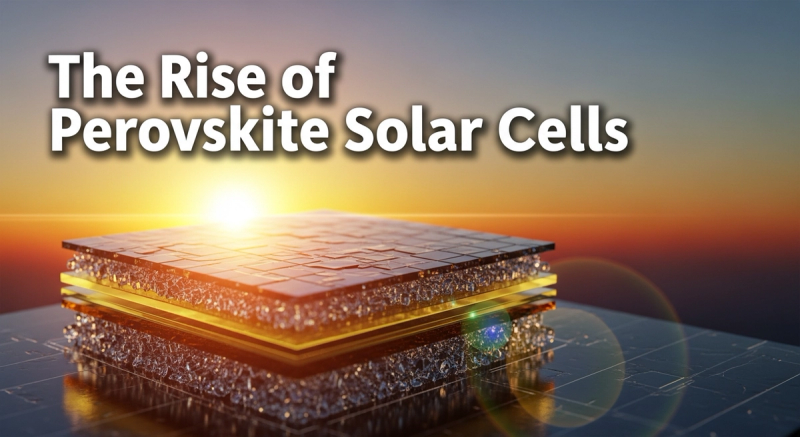
In the relentless pursuit of clean energy, solar technology has evolved dramatically over the past few decades. While traditional silicon solar panels have dominated the market, a revolutionary new contender is emerging: perovskite solar cells. These innovative photovoltaic materials are rapidly gaining attention in scientific circles and industry reports, promising to transform how we harness solar power. With their exceptional efficiency potential, lower manufacturing costs, and unique flexibility, perovskite solar cells aren't just incremental improvements—they represent a paradigm shift in renewable energy technology. This article delves into the science, milestones, advantages, and challenges surrounding the rise of perovskite solar cells, exploring why they're poised to become a cornerstone of the global energy transition.
Understanding Perovskite Solar Cells
Perovskite solar cells (PSCs) are named after their crystal structure, which mimics the mineral perovskite (calcium titanium oxide). Unlike rigid silicon panels, these cells can be fabricated using solution-based processes—similar to printing newspapers—enabling ultra-thin, lightweight, and flexible devices. The active layer typically consists of organic-inorganic hybrid materials with the general formula ABX₃, where A is an organic cation, B is a metal (like lead or tin), and X is a halide ion. This unique composition allows PSCs to absorb light across a broader spectrum than silicon, potentially capturing more energy from the sun.
How They Differ from Traditional Solar Cells
Concentrated silicon photovoltaics have long been the industry standard, but they come with significant limitations. Silicon panels require high-temperature processing and pure crystalline materials, making them energy-intensive and expensive to manufacture. In contrast, perovskite cells can be produced at room temperature using low-cost raw materials. This difference translates to drastically reduced carbon footprints during production and the potential for roll-to-roll manufacturing on flexible substrates. Furthermore, PSCs achieve higher efficiencies in laboratory settings—surpassing 25% in recent tests—compared to silicon's theoretical maximum of around 29%. This leap in performance makes them a compelling candidate for next-generation solar solutions.
The Journey: Key Milestones in Perovskite Development
The story of perovskite solar cells is one of rapid scientific breakthroughs. First explored in photovoltaics in 2009 with a modest efficiency of 3.8%, these cells stunned researchers by doubling their performance within just two years. By 2012, efficiencies surpassed 10%, and by 2020, lab records hit 25.5%, rivaling mature silicon technology. Major milestones include the introduction of mixed-halide perovskites to improve stability, the development of tandem cells combining perovskite with silicon for boosted efficiency, and innovations in encapsulation techniques to protect against environmental degradation. These advances have accelerated from academic labs to industrial pilot plants, with companies like Oxford PV and Saule Technologies leading commercialization efforts.
Why Perovskites Are Gaining Momentum
The surge in perovskite adoption stems from their compelling advantages over conventional solar technologies. Let's explore what makes them so transformative:
- Unprecedented Efficiency Potential: PSCs can achieve higher power conversion efficiencies than silicon, especially in tandem configurations. By stacking perovskite layers with silicon or other materials, researchers have created "dual-junction" cells exceeding 33% efficiency—a feat impossible for single-junction silicon panels.
- Cost-Effective Manufacturing: Traditional silicon production involves energy-intensive processes at high temperatures. Perovskites, however, can be printed or coated onto substrates using low-cost methods like inkjet printing or slot-die coating. This reduces manufacturing costs by up to 80%, democratizing solar access.
- Versatility and Aesthetics: Perovskite solar cells can be made semi-transparent, enabling integration into windows, vehicles, and wearable tech. Their lightweight and flexible nature allows installation on curved surfaces—impossible with rigid panels—expanding applications from building-integrated photovoltaics (BIPV) to portable chargers.
- Rapid Innovation Cycles: The field moves at lightning speed, with efficiency records broken every few months. This agility contrasts sharply with silicon's incremental improvements, positioning perovskites at the forefront of solar innovations reshaping 2026.
Environmental Impact and Sustainability
Despite their benefits, perovskites face sustainability challenges. Lead-based formulations raise toxicity concerns, though research on lead-free alternatives (like tin-based perovskites) is progressing. Importantly, their lower energy requirements during manufacturing result in significantly shorter energy payback times—just 1-3 months compared to silicon's 1-4 years. As recycling methods improve, PSCs could become more circular, aligning with global renewable energy procurement trends in 2026 that prioritize lifecycle sustainability.
Overcoming Hurdles: Stability and Scalability
No technology is perfect, and perovskite solar cells face critical challenges. Their Achilles' heel remains stability: prolonged exposure to heat, moisture, and UV light can degrade performance within months, unlike silicon's 25+ year lifespan. However, recent breakthroughs in encapsulation techniques—using barrier materials like atomic-layer-deposited oxides—are extending operational lifespans to over 5 years in accelerated aging tests. Meanwhile, lead content concerns are being addressed through encapsulation strategies and non-toxic material substitutions. Scalability is another hurdle; while pilot lines exist, mass production requires solving batch consistency issues and scaling deposition techniques. Yet, these challenges are being rapidly addressed, with AI in renewable energy accelerating material discovery and process optimization.
The Future: Integration and Beyond
The horizon looks bright for perovskite solar cells, particularly in tandem applications. By pairing perovskite's superior light absorption with silicon's established durability, these hybrid systems could exceed 30% efficiency while leveraging existing manufacturing infrastructure. For businesses, this means more cost-effective solar installations and novel applications like energy storage solutions integrated into building facades. Additionally, perovskites could enable ultra-lightweight solar for drones, satellites, and electric vehicles, revolutionizing mobility. As part of top renewable energy innovations transforming businesses, PSCs may also complement green hydrogen production by powering electrolysis systems with higher efficiency and lower costs.
Conclusion
The rise of perovskite solar cells marks a pivotal moment in renewable energy history. Their blend of high efficiency, low production costs, and versatility addresses critical limitations of traditional photovoltaics. While stability and scalability challenges persist, rapid advancements in materials science and manufacturing suggest these hurdles will be overcome in the coming decade. As businesses and governments accelerate renewable energy procurement, perovskites will likely become integral to the global energy mix—powering everything from skyscrapers to wearable tech. With continuous innovation and supportive policies, these "miracle materials" could soon make solar energy more accessible, affordable, and ubiquitous than ever before.
What are perovskite solar cells?
Perovskite solar cells are photovoltaic devices made from materials with a crystal structure similar to the mineral perovskite. They offer higher efficiency potential and lower manufacturing costs than traditional silicon solar panels.
How efficient are perovskite solar cells?
Lab-tested perovskite solar cells have achieved efficiencies exceeding 25%, with tandem configurations surpassing 33%. This surpasses the efficiency of most commercial silicon panels.
Are perovskite solar cells toxic?
Some formulations contain lead, raising environmental concerns. However, researchers are developing lead-free alternatives using tin or other metals, and encapsulation techniques minimize leakage risks.
When will perovskite solar cells be commercially available?
Pilot production already exists, with companies like Oxford PV targeting commercial deployment by 2024-2025. Widespread adoption may take 5-10 years as stability and scalability challenges are resolved.
Can perovskite solar cells replace silicon panels?
While unlikely to fully replace silicon, perovskites will likely complement them—especially in tandem configurations that boost efficiency. Their flexibility also enables new applications impossible for rigid silicon.
How much do perovskite solar cells cost?
Manufacturing costs are projected to be 60-80% lower than silicon due to simpler processing and lower energy requirements. However, commercial pricing will depend on scaling and durability improvements.
Related Tags

About the Author
Freya O'Neill
freya-o-neill is a technology journalist specializing in artificial intelligence, software innovation, cybersecurity, and emerging digital trends. She enjoys explaining complex technologies in clear, accessible language for both professionals and everyday readers.
Enjoyed this article?
Check out more content on our blog or follow us on social media.
Browse more articles