The Evolution of Humanoid Robotics

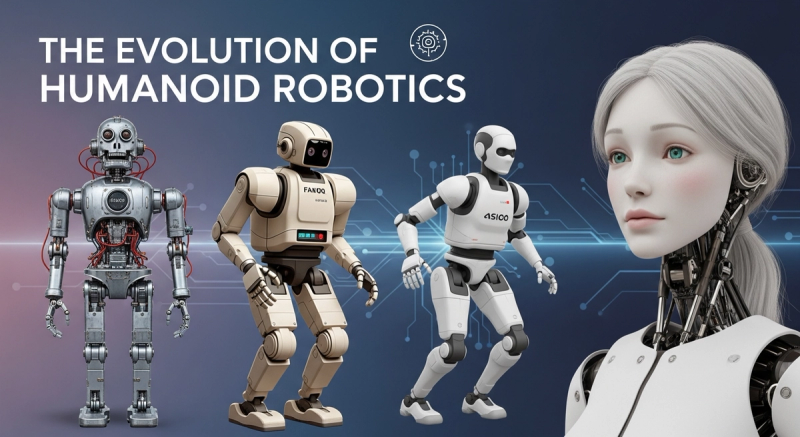
Humanoid robots have long been the ultimate benchmark for robotics: bipedal locomotion, dexterous hands, expressive faces, and the ability to navigate human environments. What was once stiff, power-hungry, and painfully slow is now fluid, efficient, and increasingly capable. 2026 marks the inflection point where humanoids move from impressive demos to practical pilots. Fueled by the dexterity revolution, cheaper actuators, and embodiment-trained AI, we're witnessing an evolutionary leap.
This timeline traces the journey—and shows why the next decade could redefine human-robot coexistence.
Milestones in Humanoid Evolution: A Quick Timeline
| Year | Robot / Milestone | Key Achievement | Why It Mattered |
|---|---|---|---|
| 2000 | Honda ASIMO | Stable walking, stair climbing, basic gestures | First truly reliable bipedal platform; inspired a generation |
| 2013 | Boston Dynamics Atlas (hydraulic) | Dynamic acrobatics, parkour, backflips | Showed superhuman agility possible |
| 2016 | SoftBank Pepper | Commercial social humanoid deployment | Proved market appetite for interaction (even if limited) |
| 2021 | Tesla Bot concept | Elon Musk announces general-purpose humanoid | Brought massive funding and attention to the space |
| 2023 | Figure 01, Agility Digit pilots | Real warehouse tasks with remote oversight | First revenue-generating humanoid work |
| 2024 | Atlas goes electric, Optimus Gen 1 walks | Shift to efficient electric actuators | Power consumption drops 10x; runtime feasible |
| 2025 | Dexterity breakthroughs + foundation models | Hands achieve human-level manipulation in labs | Unlocks useful work beyond locomotion |
| 2026 | Mass pilots begin | Optimus, Figure, Atlas in factories, retail, homes | Transition from R&D to deployment at scale |
What Changed in 2025-2026: The Perfect Storm
- Electric over Hydraulic: New Atlas, Optimus Gen 2, and others ditch heavy pumps for lightweight, efficient motors. Battery life jumps from minutes to hours.
- End-to-End Learning: Vision-to-action models trained on vast teleoperated + simulated data replace brittle state machines. Robots generalize like never before.
- Cost Crash: Estimated BOM for a capable humanoid drops below $50K in volume—making ROI viable for many tasks.
- Dexterity Integration: The hand revolution finally meets the body.
Current Leaders in 2026: Who's Closest to Shipping
- Tesla Optimus: Highest production scale potential; already folding laundry and sorting objects in factory pilots.
- Figure 01: Strongest on natural language + task understanding; commercial deals with BMW and food service.
- Agility Robotics Digit: Proven logistics workhorse; adding dexterous arms rapidly.
- Boston Dynamics Atlas: Unmatched dynamic movement; Hyundai focusing on automotive use cases.
- 1X Technologies (EVE): Quiet leader in safe, gentle household tasks.
- Sanctuary AI Phoenix: Emphasis on human-like teleoperation for data collection.
Where Humanoids Will Work First (2026-2028)
- Structured manufacturing (loading machines, quality checks)
- Warehouses & logistics (picking, packing, transport)
- Retail & hospitality (stocking, customer assistance)
- Elder care & healthcare assistance (non-medical tasks)
- Home pilots (laundry, dishes, light cleaning—for early adopters)
Note: Full autonomy is still limited—most deployments use remote oversight or fleet management (augmentation, not replacement).
Challenges That Remain
- Safety in Unstructured Environments: One fall or collision could derail public trust.
- Battery & Runtime: Still far from all-day operation without charging stations.
- Cost vs. Human Labor: Must beat $15-20/hour total cost in many regions.
- Social Acceptance: The uncanny valley lingers (perception evolving).
The Next Leap: 2027-2030 Outlook
Expect consumer models under $30K, seamless natural language interaction, and true multi-hour autonomy. The real game-changer? When humanoids start learning from each other in shared cloud brains—accelerating improvement exponentially.
We're not building replacements for humans. We're building partners that handle the dull, dangerous, and dirty—so we can focus on what humans do best.
Would you welcome a humanoid helper in your home or workplace? Let us know in the comments.

About the Author
Freya O'Neill
freya-o-neill is a technology journalist specializing in artificial intelligence, software innovation, cybersecurity, and emerging digital trends. She enjoys explaining complex technologies in clear, accessible language for both professionals and everyday readers.
Enjoyed this article?
Check out more content on our blog or follow us on social media.
Browse more articles