The 2026 AI Job Apocalypse Is Already Canceled – Here’s What Actually Happened

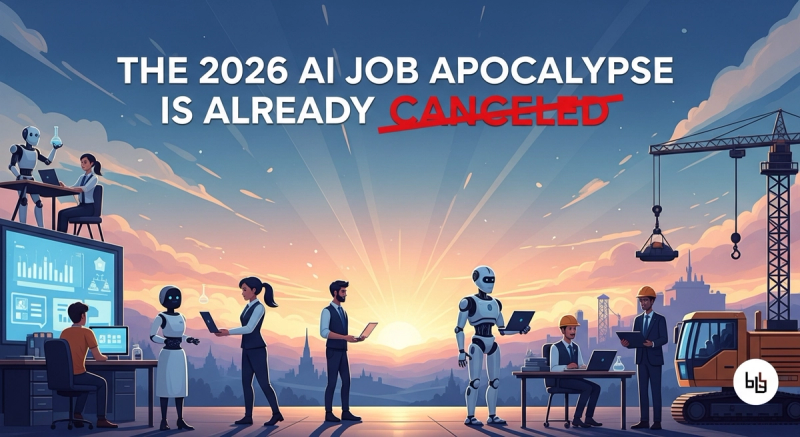
Remember the panic? Back in 2024 and 2025, headlines screamed about the "2026 AI Job Apocalypse," predicting mass unemployment as artificial intelligence rapidly evolved into a workforce-destroying force. Fast-forward to 2026, and that doomsday scenario hasn’t materialized. Instead of robots lining up for unemployment benefits, we’re witnessing a more nuanced transformation. The so-called apocalypse was called off, not because AI failed, but because humans adapted, redefined roles, and discovered a powerful synergy between human ingenuity and machine intelligence. Here’s what truly unfolded.
The Hype Machine: Why Everyone Feared 2026
The fear wasn’t entirely unfounded. Early predictions, fueled by rapid advancements in generative AI and automation, suggested that by 2026, nearly 20% of jobs could be eliminated. This narrative gained traction as companies like OpenAI, Anthropic, and Google DeepMind pushed the boundaries of what AI could do. Media outlets amplified the anxiety with sensational stories of lawyers replaced by chatbots, coders outmaneuvered by AI, and creative industries collapsing under the weight of AI-generated content. Latest AGI Updates 2026 only deepened concerns, hinting at an imminent AI singularity that would render human labor obsolete. The world braced for upheaval.
The Reality: AI as a Catalyst, Not a Catastrophe
So, what actually changed? By 2026, AI became less of a job-replacer and more of a job-reshaper. Instead of entire professions vanishing, workflows evolved. For instance, in fintech, AI’s disruption in fintech automated routine tasks like fraud detection, freeing human experts to focus on complex strategy and client relationships. Similarly, in healthcare, AI wearables revolutionizing healthcare handled preliminary diagnostics, allowing doctors to prioritize critical cases. The result? Productivity soared, but humans remained firmly in the loop, guiding, supervising, and leveraging AI as a supercharged assistant.
Why the Apocalyptic Predictions Missed the Mark
- AI’s Limitations: While AI excels at pattern recognition and data crunching, it lacks emotional intelligence, creativity, and ethical judgment—skills humans possess. Roles requiring empathy, leadership, or nuanced decision-making thrived.
- Human Adaptability: Workers didn’t passively accept displacement. Instead, they upskilled. Companies invested heavily in training, teaching employees to collaborate with tools like ChatGPT for brainstorming and project management.
- Economic Incentives: Eliminating jobs often proved costlier than expected. Deploying AI systems required massive infrastructure, maintenance, and oversight—making human-AI partnerships more economical.
The Jobs That Defied the AI Takeover
Contrary to fears, certain sectors not only survived but flourished. AI augmented rather than replaced roles in:
- Creative Industries: Designers and marketers used AI for ideation but relied on human storytelling to craft resonant campaigns. Tools like ChatGPT for brainstorming became co-pilots, not replacements.
- Healthcare and Wellness: AI wearables handled data collection, but nurses and therapists provided the human touch patients craved. Telehealth platforms integrated AI for triage, ensuring faster care.
- Skilled Trades: Electricians, plumbers, and technicians benefited from AI-driven diagnostics but couldn’t be automated for on-site, hands-on work.
- AI Governance and Ethics: As adoption grew, so did demand for experts to ensure ethical use. AGI ethics and global policy in 2026 became a booming field.
The Skills That Define the AI Era
With routine tasks automated, human skills became more valuable than ever. Employers now prioritize:
- Critical Thinking: Questioning AI outputs and making context-aware decisions.
- Adaptability: Continuously learning new technologies. Conducting AI audits became a key competency.
- Collaboration: Working alongside AI tools. AI project management tools streamlined workflows, but human leadership drove success.
- Emotional Intelligence: Building trust, resolving conflicts, and motivating teams in hybrid work environments.
Businesses That Thrived: Embracing Human-AI Teams
Companies that survived—and excelled—didn’t treat AI as a plug-and-play replacement. Instead, they integrated it thoughtfully:
- Small Businesses: Leveraged AI audits to identify efficiency gaps without overhauling operations.
- Financial Services: Used AI for data analysis but retained human advisors for personalized financial planning.
- Education: Employed AI tutors for personalized learning, but teachers focused on mentorship and inspiration.
The Dark Side: Challenges That Did Materialize
While the job apocalypse was overstated, challenges emerged:
- Deepfake Concerns: AI-generated media blurred reality. Deepfake detection became essential for media and law enforcement.
- Job Polarization: Mid-skill roles faced pressure, requiring workers to transition to higher-skill positions.
- AI Ethics Gaps: Without proper governance, AI biases could perpetuate inequality. Global policy initiatives stepped in to address this.
Preparing for a Human-Centric AI Future
As we move beyond 2026, lessons are clear:
- Lifelong Learning: Upskilling isn’t optional. Platforms offering AI literacy courses saw enrollment surge.
- AI Literacy: Understanding how AI works—like analyzing video metadata to spot deepfakes—became a civic skill.
- Ethical Guardrails: Businesses adopted ethical AI frameworks to build trust with customers and employees.
Conclusion: A New Era of Collaboration
The 2026 AI Job Apocalypse was never inevitable. Instead of a dystopian takeover, we got an evolution—a partnership between human creativity and AI efficiency. Jobs didn’t disappear; they transformed. Skills that machines couldn’t replicate became more valuable than ever. AI didn’t end work; it redefined it, pushing humanity toward more meaningful, strategic, and collaborative roles. The future isn’t about humans versus machines; it’s about humans with machines.
FAQs: The 2026 AI Job Apocalypse – Answered
Did AI really eliminate millions of jobs in 2026?
No. While some routine tasks were automated, net job growth continued in most sectors. AI primarily augmented work rather than replacing entire roles.
Which jobs were most affected by AI?
Routine, repetitive roles in data entry, basic customer service, and manual manufacturing saw the most automation. However, these roles often evolved into supervisory or hybrid positions.
How did workers adapt to the AI era?
Workers embraced reskilling through online courses, on-the-job training, and learning to collaborate with AI tools. Companies invested heavily in human-AI teamwork.
Is AI a threat to creative professions?
Not entirely. AI handled ideation and execution of basic tasks, but human creativity, storytelling, and emotional depth remained irreplaceable in fields like art, design, and marketing.
What skills are most valuable now?
Critical thinking, adaptability, emotional intelligence, and AI literacy are top priorities. Knowing how to use tools like ChatGPT for brainstorming or analyze deepfakes is increasingly essential.
How can businesses prepare for future AI changes?
Conduct regular AI audits, invest in employee training, establish ethical guidelines, and focus on human-AI collaboration rather than full automation.
Related Tags

About the Author
Freya O'Neill
freya-o-neill is a technology journalist specializing in artificial intelligence, software innovation, cybersecurity, and emerging digital trends. She enjoys explaining complex technologies in clear, accessible language for both professionals and everyday readers.
Enjoyed this article?
Check out more content on our blog or follow us on social media.
Browse more articles