Budget Solo Road Trips Across the Pacific Northwest for Remote Workers in 2026

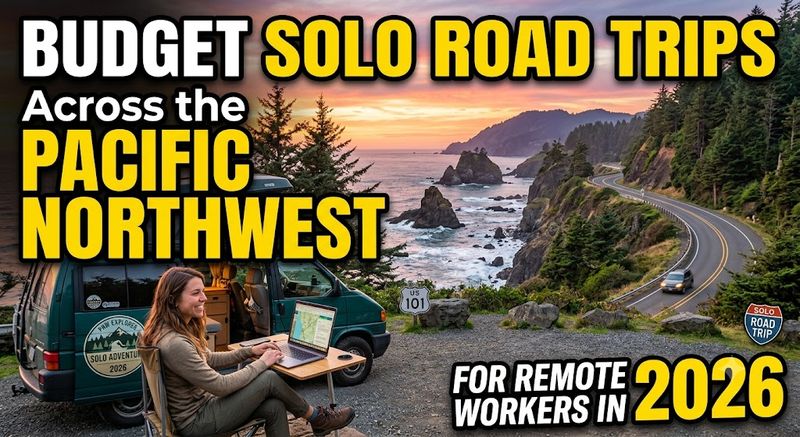
The ultimate guide to balancing work, wanderlust, and your wallet in one of America's most scenic regions.
Why the Pacific Northwest Is a Remote Worker's Dream in 2026
If you're a remote worker craving fresh air, dramatic coastlines, and mountain vistas without draining your savings account, the Pacific Northwest (PNW) might just be your perfect 2026 destination. Stretching from Oregon's rugged coastline through Washington's evergreen forests and up into British Columbia's fjord-like inlets, this region offers an unbeatable combination of affordability, connectivity, and natural beauty.
Unlike digital nomad hotspots that require international flights and visa headaches, the PNW is accessible, English-speaking, and packed with infrastructure designed for modern remote workers. Coffee shops with blazing Wi-Fi? Check. Scenic campgrounds with cell service? Plenty. Affordable small towns with character? Absolutely.
In this guide, we'll map out everything you need to know about planning budget solo road trips across the Pacific Northwest as a remote worker in 2026 — from route planning and accommodation hacks to the best coworking spots with a view.
Planning Your PNW Remote Work Road Trip
Before you hit the road, a little strategic planning goes a long way. If you're new to budget travel planning, our guide on How to Plan a Budget Travel Itinerary: Your Ultimate Guide covers the fundamentals of stretching every dollar while maximizing experiences.
Best Time to Visit
The PNW has a reputation for rain, but that's part of its charm — and its advantage for budget travelers.
| Season | Pros | Cons | Budget Impact |
|---|---|---|---|
| Spring (Mar–May) | Wildflowers, waterfalls at peak flow, fewer crowds | Unpredictable weather, some mountain roads closed | Lower accommodation costs |
| Summer (Jun–Aug) | Best weather, all roads open, long daylight hours | Peak crowds, higher prices, campgrounds book up | Most expensive season |
| Fall (Sep–Nov) | Stunning foliage, harvest festivals, crisp air | Increasing rain, shorter days | Great value, especially October |
| Winter (Dec–Feb) | Snow sports, hot springs, empty trails | Mountain pass closures, limited daylight, wet conditions | Lowest prices, but requires preparation |
Pro tip for remote workers: Fall is the sweet spot. You'll find lower accommodation rates, reliable Wi-Fi in towns that aren't overwhelmed by tourists, and the moody weather actually enhances the PNW aesthetic that makes your video call background unforgettable.
Setting Your Budget
A realistic solo PNW road trip budget for remote workers in 2026 breaks down like this:
| Category | Budget (Per Week) | Mid-Range (Per Week) |
|---|---|---|
| Gas | $80–$120 | $120–$180 |
| Accommodation | $150–$250 (camping/mixed) | $300–$500 (motels/Airbnb) |
| Food | $100–$150 (groceries + occasional meals out) | $200–$300 |
| Coworking/Coffee | $50–$100 | $100–$150 |
| Activities | $50–$100 | $150–$250 |
| Phone/Data | $30–$50 | $30–$50 |
| Total | $460–$770 | $900–$1,430 |
The budget column assumes a mix of free camping, grocery cooking, and strategic splurges. The mid-range column offers more comfort while still being reasonable for a working professional.
Essential Gear for the Remote Worker on the Road
Packing light is crucial when you're living out of a vehicle. Our Ultimate Minimalist Packing List for 5 Days: Travel Light, Travel Right is a great starting point, but remote work requires a few additional essentials:
Tech Setup
- Mobile hotspot device (or reliable phone tethering plan) — Verizon and T-Mobile generally have the best PNW coverage
- Power inverter or portable power station — for charging laptops at campsites
- Noise-canceling headphones — essential for coffee shop work sessions
- Laptop stand and portable keyboard — your back will thank you after weeks on the road
- External monitor (optional, if you have the space) — a game-changer for productivity
Vehicle & Camping
- Roof tent or sleeping platform — saves hundreds on accommodation over a month
- Curtains or window covers — privacy and temperature control
- Portable camp stove — cooking your own meals is the #1 budget saver
- Collapsible water containers — many campgrounds have potable water fills
For eco-conscious travelers, consider our Sustainable Travel Toiletries 2026: Zero-Waste & Reef-Safe Packing List to minimize your environmental footprint while exploring these pristine landscapes.
Top 3 Budget-Friendly PNW Road Trip Routes for Remote Workers
Route 1: The Oregon Coast & Cascades Loop (7–10 Days)
Distance: ~800 miles | Best for: First-time PNW visitors, ocean lovers
Itinerary Overview:
Portland → Cannon Beach → Tillamook → Newport → Florence → Crater Lake → Bend → Portland
Work-Friendly Stops:
- Cannon Beach: Insomnia Coffee Company offers reliable Wi-Fi and ocean views. Work in the morning, walk Haystack Rock at sunset.
- Newport: The Newport Public Library has excellent free Wi-Fi and quiet study spaces. Rogue Brewery is a great spot for an afternoon call — they don't mind lingering laptop workers.
- Bend: A remote work paradise. Thump Coffee and Lone Pine Coffee Roasters are laptop-friendly, and the city has several affordable coworking spaces like BendTECH.
Budget Accommodation:
- Free camping: Siuslaw National Forest has dispersed camping near the coast (no reservations needed, 14-day limit).
- Budget stays: Heceta Head Lighthouse B&B (off-season rates) or numerous affordable motels in Coos Bay.
Must-Do Experiences:
- Hike the Cape Perpetua Scenic Area ($5 parking, free with America the Beautiful Pass)
- Explore the Oregon Dunes (free to access, rent a sandboard for $25)
- Watch the sunrise at Crater Lake (free with National Parks Pass, $30/vehicle otherwise)
Estimated Total Cost: $600–$900 for 10 days (budget style)
Route 2: The Washington Peninsula & Olympic Loop (10–14 Days)
Distance: ~650 miles | Best for: Rainforest enthusiasts, hot spring seekers
Itinerary Overview:
Seattle → Port Townsend → Olympic National Park → Forks → Ruby Beach → Lake Quinault → Aberdeen → Mount Rainier → Seattle
Work-Friendly Stops:
- Port Townsend: Better Living Through Coffee is a local institution with strong Wi-Fi and harbor views. The town itself is incredibly walkable and photogenic.
- Forks: Yes, it's the Twilight town — lean into it. The Forks Coffee Shop has surprisingly good internet and a quirky vibe perfect for creative work.
- Port Angeles: Next Door Gastropub welcomes remote workers during off-peak hours, and the downtown library is modern and spacious.
Budget Accommodation:
- Olympic National Park campgrounds: Sol Duc Hot Springs Resort campground ($25/night) includes access to the hot springs — a steal compared to the lodge rates.
- Dispersed camping: Olympic National Forest surrounding the park offers free camping with a Northwest Forest Pass ($30 annual, pays for itself quickly).
- Stealth camping: Port Townsend and Port Angeles both have safe residential areas where overnight parking is tolerated (always check local regulations).
Must-Do Experiences:
- Hike the Hoh Rain Forest Hall of Mosses Trail (free with park entry)
- Soak in Sol Duc Hot Springs ($18 day-use if not camping there)
- Explore Ruby Beach at low tide (free, absolutely magical)
- Drive Hurricane Ridge Road for panoramic mountain views (free with park entry)
Estimated Total Cost: $700–$1,100 for 14 days (budget style)
Route 3: The Columbia River Gorge & Mount Hood Circuit (5–7 Days)
Distance: ~400 miles | Best for: Weekend warriors, waterfall chasers, tight budgets
Itinerary Overview:
Portland → Hood River → The Dalles → Goldendale → Trout Lake → Government Camp → Portland
Work-Friendly Stops:
- Hood River: Doppio Coffee + Lounge is the unofficial remote worker headquarters of the Gorge. Fast Wi-Fi, great pastries, and a patio with mountain views.
- White Salmon, WA: Just across the river from Hood River, North Shore Cafe is less crowded and equally laptop-friendly.
- Government Camp: The Mt. Hood Brewing Co. has a cozy lodge atmosphere and decent Wi-Fi for afternoon work sessions.
Budget Accommodation:
- Home Valley Park campground (WA side of the Gorge): $20/night, right on the river.
- Trillium Lake campground (near Government Camp): $22/night, iconic Mount Hood reflections.
- Free dispersed camping: Gifford Pinchot National Forest has abundant spots, especially near Trout Lake.
Must-Do Experiences:
- Waterfall hikes along the Historic Columbia River Highway (Multnomah Falls, Latourell Falls, Bridal Veil Falls — all free)
- Windsurfing lesson in Hood River (budget option: watch the pros from the Hook instead)
- Timberline Lodge visit (free to explore, iconic The Shining exterior)
- Wildflower meadows at Rowena Crest (spring only, free)
Estimated Total Cost: $350–$550 for 7 days (budget style)
Where to Work: Best Coffee Shops & Coworking Spaces
One of the biggest challenges of remote work road trips is finding reliable places to work. Here's a curated list of PNW spots that welcome laptop warriors:
Oregon
| Location | Spot | Vibe | Wi-Fi Rating |
|---|---|---|---|
| Portland | Coava Coffee (Multiple locations) | Industrial, serious coffee | ★★★★★ |
| Bend | Backporch Coffee Roasters | Mountain casual, spacious | ★★★★☆ |
| Eugene | The Barn Light | Artsy, downtown | ★★★★☆ |
| Astoria | Coffee Girl | Waterfront, historic | ★★★☆☆ |
Washington
| Location | Spot | Vibe | Wi-Fi Rating |
|---|---|---|---|
| Seattle | Zeitgeist Coffee | Pioneer Square classic | ★★★★★ |
| Bellingham | Black Drop Coffeehouse | College town energy | ★★★★☆ |
| Leavenworth | Argonaut Espresso Bar | Bavarian charm | ★★★☆☆ |
| Spokane | Atticus Coffee & Gifts | Literary, cozy | ★★★★☆ |
Remote work etiquette: Always buy something every 2–3 hours, tip well, and avoid taking calls during peak morning rushes (8–10 AM). Many PNW coffee shops are small businesses that genuinely welcome remote workers — respect the space, and it'll respect you.
Connectivity in the Wild: Staying Online
The PNW's remote areas are stunning, but they can be connectivity dead zones. Here's how to stay online:
Cell Coverage by Carrier (2026)
- Verizon: Best overall coverage, especially on the coast and in the Cascades
- T-Mobile: Excellent in cities and along I-5, spotty on remote forest roads
- AT&T: Good middle ground, strong in most towns
- Google Fi: Uses multiple networks, excellent for road trippers
Pro Connectivity Tips
- Download offline maps before leaving town — Google Maps and Maps.me both work offline
- Scope out libraries — nearly every PNW town has a public library with free Wi-Fi, often faster than coffee shops
- Use campground Wi-Fi strategically — many KOA and state park campgrounds offer Wi-Fi near the office/ranger station
- Invest in a cell booster — if you're serious about remote PNW work, a weBoost or similar device can turn one bar into three
- Plan "upload days" — if you need to upload large files, plan to be in Bend, Portland, Seattle, or Spokane
Eating Well on a Budget
The PNW food scene is legendary, but eating out for every meal will destroy your budget. Here's the remote worker's approach:
Grocery Strategy
- Fred Meyer (Kroger-owned, prevalent in OR/WA) — best prices, especially with their rewards app
- WinCo Foods — employee-owned, bulk section is unbeatable for trail mix, oats, and snacks
- Farmers markets — spring through fall, nearly every PNW town has one. Buy fresh produce and local cheese
Budget Meal Ideas (No Kitchen Required)
- Overnight oats with local berries and Tillamook yogurt
- Tortilla wraps with hummus, spinach, and smoked salmon (PNW specialty, surprisingly affordable at grocery stores)
- Instant ramen upgraded with farmers market greens and a soft-boiled egg
- Campfire quesadillas — tortillas, cheese, canned beans, hot sauce
Worth-the-Splurge Meals
- Fish and chips on the coast — $12–$15, fresher than anything you'll get inland
- Food carts in Portland — $8–$12 for world-class cuisine
- Oyster happy hours in Seattle — many places offer $1–$2 oysters during weekday afternoons
Safety & Solo Travel Considerations
Solo road tripping as a remote worker comes with unique considerations. If you're new to the digital nomad lifestyle, our article on Digital Nomad Life: What No One Tells You Before You Start covers the mental and logistical adjustments you'll face.
PNW-Specific Safety Tips
- Weather changes fast — always pack rain gear and layers, even in summer
- Wildlife awareness — black bears are common in the Olympics and Cascades. Use bear canisters or hang food properly
- Tide tables matter — if you're exploring the coast, know when high tide is. Several beautiful beaches become dangerous at high tide
- Road conditions — mountain passes (especially around Mount Rainier and Crater Lake) can have snow well into June and as early as September. Check TripCheck.com (OR) and WSDOT.com (WA) before heading into the mountains
- Let someone know your itinerary — share your rough route with a friend or family member, especially if you're camping in remote areas
Solo Female Traveler Notes
The PNW is generally very safe for solo female travelers. Towns like Bend, Hood River, and Port Townsend have strong, welcoming communities. That said:
- Trust your instincts about camping spots — if a dispersed camping area feels off, move
- Coffee shops and libraries are your friend — they're public, warm, and full of people if you need company
- Join PNW-focused Facebook groups or Reddit communities (r/PNW, r/oregon, r/washington) — locals are friendly and helpful
Hidden Gems & Underrated Stops
While everyone flocks to Multnomah Falls and Pike Place Market, some of the PNW's best experiences fly under the radar. Our guide to Hidden Travel Gems: 7 Underrated Destinations Worth Visiting explores this concept more broadly, but here are some PNW-specific secrets:
Oregon
- The Painted Hills — Part of the John Day Fossil Beds, these striped hills look like another planet. Free, and rarely crowded.
- Opal Creek Wilderness — An old-growth forest with crystal-clear swimming holes. The 7-mile round-trip hike keeps crowds away.
- Cape Blanco — The westernmost point in Oregon, with a lighthouse you can tour for $2 and dramatic cliff camping.
Washington
- The Palouse — Southeastern Washington's rolling wheat hills are stunning in spring and fall. Steptoe Butte offers 360-degree views for free.
- Cape Flattery — The northwesternmost point in the contiguous US. A short boardwalk hike leads to sea stacks and sea caves.
- Diablo Lake — Turquoise glacial water in the North Cascades. The overlook requires no hiking and offers one of the best views in the state.
British Columbia (If You're Passport-Ready)
- Hornby Island — Accessible by two ferries, this Gulf Island has a hippie vibe, excellent free camping at Tribune Bay, and some of the warmest swimming water north of California.
- Wells Gray Provincial Park — Home to Helmcken Falls (higher than Niagara) and dozens of free waterfalls, with fraction of the crowds of Banff.
Sample 2-Week Remote Work Road Trip Schedule
Here's a realistic day-by-day breakdown that balances work and exploration:
| Day | Location | Work/Explore Split |
|---|---|---|
| 1 | Portland | Arrive, stock up, work half day |
| 2 | Cannon Beach | Morning work at coffee shop, afternoon beach walk |
| 3 | Cannon Beach | Full work day, sunset at Haystack Rock |
| 4 | Newport | Travel morning, afternoon work at library |
| 5 | Newport | Full work day, evening bayfront exploration |
| 6 | Florence | Morning work, afternoon Oregon Dunes |
| 7 | Crater Lake | Travel day, evening arrival, light work if signal allows |
| 8 | Crater Lake | Morning sunrise, full work day from lodge Wi-Fi |
| 9 | Bend | Travel morning, afternoon work at coffee shop |
| 10 | Bend | Full work day, evening brewery hop |
| 11 | Mount Hood | Morning work, afternoon drive to Government Camp |
| 12 | Hood River | Travel morning, afternoon work with Gorge views |
| 13 | Hood River | Full work day, evening windsurfing or hiking |
| 14 | Portland | Return, final work session, departure |
This schedule assumes a Monday–Friday work week with weekends for longer travel and bigger adventures. Total estimated cost: $1,200–$1,600 including gas, mixed accommodation (campgrounds + one motel stay per week), groceries, and activities.
Final Thoughts: Making the PNW Your Office
The Pacific Northwest in 2026 offers something increasingly rare: a destination where you can work effectively, explore deeply, and spend modestly — all without leaving the country or dealing with time zone nightmares. Whether you're a seasoned digital nomad or just testing the waters of location-independent work, a solo PNW road trip is one of the most rewarding ways to blend productivity with adventure.
The key is flexibility. Weather will change, campgrounds will fill up, and that "guaranteed" cell signal might disappear around a mountain bend. But that's also the magic of the PNW — it's untamed enough to feel like an adventure, yet developed enough to keep you connected to your work and the world.
Pack your laptop, fill your gas tank, and point your wheels toward the misty mountains. Your office has never looked better.
Ready to plan your trip? Start with our How to Plan a Budget Travel Itinerary: Your Ultimate Guide for the foundational skills, and don't forget to check out our Ultimate Minimalist Packing List for 5 Days: Travel Light, Travel Right to keep your load manageable. If you're new to the remote work lifestyle, Digital Nomad Life: What No One Tells You Before You Start will prepare you for the realities of working from the road.
Happy trails, and may your Wi-Fi always be strong.
Related Tags

About the Author
Ethan Jackson
Ethan Jackson is a travel and energy writer covering sustainable tourism, renewable energy, outdoor destinations, and global environmental developments. He explores how innovation and responsible travel are shaping a more sustainable future.
Enjoyed this article?
Check out more content on our blog or follow us on social media.
Browse more articles