AI for Elder Care Coordination: How Families Are Using Agents to Manage Senior Schedules and Health

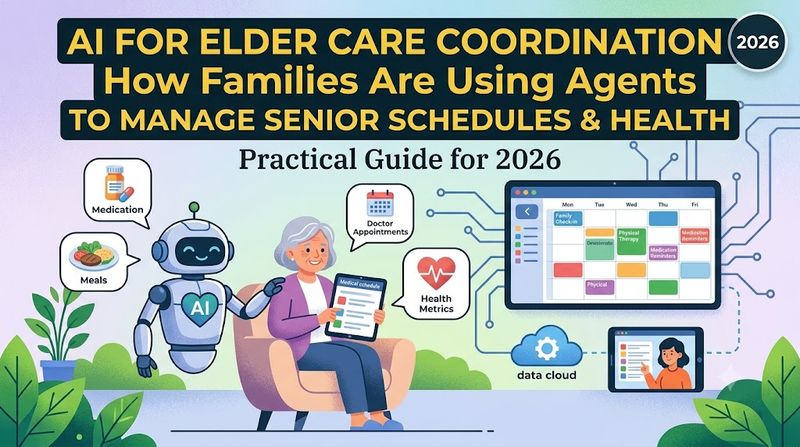
Over 53 million Americans are providing unpaid care to an adult family member, and the logistical burden is pushing millions to a breaking point every year. In 2026, a new wave of AI-powered care coordination agents is emerging not to replace family caregivers, but to transform how they manage the overwhelming complexity of senior schedules, health monitoring, medication routines, and multi-family communication.
These are not simple chatbots or basic reminder apps. They are autonomous AI agents capable of observing health patterns, coordinating across multiple caregivers, scheduling medical appointments, tracking medication adherence, and alerting families to subtle changes that might otherwise go unnoticed until a crisis hits. For families stretched across states, juggling full-time jobs, and managing the invisible load of elder care, these tools represent a genuine shift from reactive crisis management to proactive, coordinated care.
This guide explores how families are actually using AI agents in 2026 — what works, what doesn't, how to set them up, and how to maintain the human connection that technology can support but never replace.
1. Why Family Caregivers Need AI Coordination Agents
The reality of modern family caregiving is staggering. According to the National Alliance for Caregiving, over 53 million Americans provide unpaid care to an adult family member. The physical demands, emotional weight, and sheer logistical complexity push millions of families to a breaking point every year. The CDC identifies elevated rates of depression, anxiety, and chronic illness among caregivers compared to non-caregivers.
The administrative burden alone is crushing. Managing medications across multiple prescriptions, coordinating appointments with specialists, tracking care notes between siblings, arranging transportation, and maintaining communication with healthcare providers consumes hours that most working caregivers simply do not have. One missed medication, one overlooked appointment, one delayed response to a subtle health change can cascade into hospitalization, emergency room visits, or irreversible health decline.
AI care coordination agents address this by handling the logistics so families can focus on the relationship. They do not replace the human touch of caregiving — they protect it by ensuring nothing falls through the cracks.
The Three Caregiving Crises AI Solves
Information Fragmentation: Care notes live in text threads, email chains, sticky notes, and memory. When a primary caregiver falls ill or a sibling needs to step in, critical information is scattered and inaccessible. AI agents create a single, searchable, always-current care record.
Coordination Breakdown: Multiple adult children, a spouse, hired caregivers, and healthcare providers all need to stay aligned. Without a shared system, duplicate efforts, missed handoffs, and conflicting instructions are inevitable. AI agents serve as the central coordination hub.
Early Warning Failure: Subtle changes in sleep, mobility, medication adherence, or mood often precede serious health events by days or weeks. Human caregivers, stretched thin, miss these patterns. AI agents monitor continuously and flag deviations before they become crises.
2. What Are AI Care Coordination Agents and How Do They Work?
AI care coordination agents in 2026 represent a significant evolution from the reminder apps and basic chatbots of previous years. These are autonomous systems capable of observing, reasoning, planning, and taking action on behalf of elderly individuals and their caregivers.
From Chatbots to Autonomous Care Partners
The distinction between a chatbot and an AI agent is the difference between a tool that answers questions and a system that anticipates needs. A chatbot can tell you what medications your parent takes. An AI agent notices when medication adherence patterns shift, correlates that with recent changes in sleep quality and mood, assesses whether these changes might indicate a developing health issue, and alerts the appropriate care team members with a synthesized summary and recommended actions.
This capability is built on advances in large language models, multimodal sensing, and what researchers call agentic architectures: systems that combine perception, reasoning, memory, and action into cohesive workflows. The agent does not simply process data. It understands context, maintains awareness of a patient's history, and makes nuanced judgments about when and how to intervene.
Multi-Agent Coordination Systems
Perhaps the most significant development in 2026 is the emergence of multi-agent systems in elder care. Rather than relying on a single AI system, modern platforms deploy specialized agents that collaborate: one focused on health monitoring, another on medication management, a third on social engagement, and others on nutrition, mobility, and care coordination. These agents communicate with each other, share relevant information, and coordinate their actions to provide holistic care.
When the health monitoring agent detects signs of a urinary tract infection, it simultaneously alerts the medication management agent to check for potential drug interactions with likely treatments, notifies the care coordination agent to schedule a medical appointment, and informs the social engagement agent to adjust activity recommendations. This level of integrated, proactive care was simply not possible with earlier-generation tools.
3. Key Capabilities: What These Agents Actually Do
Autonomous Schedule Management
AI agents connect to medical provider calendars, family member schedules, and transportation services to coordinate appointments without the back-and-forth of phone calls and text chains. They can reschedule when conflicts arise, send reminders to both the senior and the designated driver, and even book rideshare or medical transport when family members are unavailable.
Passive Health Monitoring
Through integration with wearable devices, smart home sensors, and voice interaction patterns, AI agents continuously monitor vital signs, sleep quality, activity levels, and behavioral patterns. They establish baseline norms for each individual and alert caregivers to deviations — a missed meal, an unusual nighttime bathroom trip pattern, a drop in daily step count, or a change in speech cadence during routine conversations.
Medication Intelligence
Beyond simple reminders, AI medication agents track adherence patterns, detect when doses are missed, correlate missed doses with other health indicators, and alert caregivers to potential problems. Some systems integrate with smart pill dispensers that release the correct dose at the correct time, while others use voice confirmation to verify medication was taken.
Caregiver Communication Hub
AI agents replace fragmented text threads and email chains with a unified communication platform. They can summarize care updates for busy siblings, flag urgent items for immediate attention, and maintain a searchable log of all care activities, observations, and provider communications. When a new caregiver steps in, they have instant access to the full care history.
Voice-First Interaction
Recognizing that many seniors struggle with smartphones and apps, leading AI care agents are designed for voice-first interaction. Seniors can call a dedicated phone number and speak naturally with an AI companion that handles reminders, answers questions, and passively monitors for cognitive or emotional changes during conversation. No smartphone, app, or internet required.
4. Top AI Care Coordination Tools for Families in 2026
FamilyMind — Best for Comprehensive Care Coordination
FamilyMind is purpose-built for families managing elderly parent care across multiple caregivers. At $25 per month, it combines health tracking, medication reminders, appointment scheduling, and caregiver coordination in a single platform. Families managing an elderly parent's care routine report that missed medications dropped from 2-3 times per week to zero, and caregiver handoffs became seamless because everyone had access to the same information. The platform includes a dedicated care advisor for questions that go beyond the software's guidance.
Orbits — Best for Family Schedule Coordination
At $20 per month, Orbits connects to everyone's calendars, manages shared to-do lists, suggests meal plans based on dietary restrictions, and sends proactive reminders. It remembers that Tuesday physical therapy conflicts with the grandchild's pickup and automatically suggests alternate slots. The privacy controls are family-safe with no third-party data sharing and encrypted storage. It is the most complete family AI assistant for households balancing elder care with work and children's schedules.
Thriving.ai — Best for All-in-One Care Companion
Thriving.ai consolidates texting, video calls, email, and care updates into a single app designed specifically for caregiving. It pairs with Fitbit, Apple Watch, and other smartwatches to track steps, sleep, and medical data. The platform includes a TV channel with calming content for seniors with dementia, learning journeys for cognitive engagement, and a shared calendar that keeps all care circle members aligned on appointments. A freemium plan makes it accessible for families wanting to test before committing.
CareYaya QuikTok — Best for Voice-First Senior Companion
Accessible by regular telephone with no smartphone or internet required, QuikTok uses a large language model to hold genuine voice conversations with older adults. It is designed to reduce loneliness and passively monitor for signs of cognitive or mental health changes over time, flagging concerns for families and caregivers. For seniors uncomfortable with technology, the simplicity of a phone call makes this remarkably accessible. CareYaya has partnered with Johns Hopkins University's AITC for Aging, an NIH-funded initiative, to develop AI tools specifically for dementia care.
ElliQ by Intuition Robotics — Best for Robotic Wellness Companion
ElliQ has evolved from a friendly voice assistant into a full Caregiver Solution including the robot and a companion app that sends real-time alerts and personalized updates. It initiates conversations, checks on wellness, encourages hydration or activity, and reminds seniors to take medications. Caregivers can set personalized goals, and ElliQ gently nudges seniors toward them. No cameras or invasive sensors are required.
Amazon Echo Show 10 — Best Entry Point for Tech-Comfortable Seniors
For seniors already comfortable with basic technology, the Echo Show 10 offers a large screen, wide compatibility, and senior-specific features like the Alexa Care Hub, which lets family members see activity patterns and get alerts. The visual interface helps seniors who benefit from seeing reminders and video calls. Setup is straightforward, and the ecosystem integrates with smart home devices for lights, thermostats, and locks.
Voiceflow AI Agents — Best for Senior Care Facilities
For families whose loved ones reside in assisted living or nursing facilities, Voiceflow enables AI-driven voice agents that handle medication reminders, streamlined scheduling, family communication with automated updates, and emergency response coordination. The platform is SOC-2 Type II, ISO 27001, GDPR, and HIPAA compliant, making it suitable for institutional settings where data security is paramount.
5. Step-by-Step Setup Guide for Families
Getting started with AI care coordination does not require technical expertise. The key is starting with one problem, solving it well, and expanding gradually. Here is a practical four-week onboarding plan:
Week 1: Establish the Foundation
Step 1 — Choose your primary coordination platform. Select one tool based on your most pressing need: FamilyMind for comprehensive care coordination, Orbits for schedule-heavy families, or Thriving.ai for all-in-one communication. Sign up for a free trial or freemium plan.
Step 2 — Gather your care circle. Identify all people involved in care: adult children, spouses, hired caregivers, and any healthcare providers willing to participate. Send them invitations to join the platform. Set clear permissions about who can see what information.
Step 3 — Input baseline information. Enter current medications with dosages and schedules, existing appointments, emergency contacts, and key medical history. This is the most time-consuming step but essential for the AI to function effectively.
Week 2: Activate Monitoring and Reminders
Step 4 — Connect devices. Pair wearable devices (Fitbit, Apple Watch, or dedicated medical monitors) with the platform. Install any smart home sensors for motion, door opening, or sleep monitoring. Connect the senior's phone or landline for voice interaction if using a voice-first companion.
Step 5 — Configure medication reminders. Set up medication schedules in the platform. If using a smart pill dispenser, synchronize it with the AI schedule. Test the reminder system to ensure the senior can hear and respond to alerts.
Step 6 — Set up appointment integration. Connect the platform to medical provider calendars if possible, or manually input upcoming appointments. Enable automatic reminders 24 hours and 2 hours before each appointment. Configure transportation alerts if family members need to arrange rides.
Week 3: Train the Family and Fine-Tune
Step 7 — Hold a family training session. Walk all caregivers through the platform interface, showing them how to log care activities, view updates, and respond to alerts. Ensure everyone understands the escalation path for urgent versus routine notifications.
Step 8 — Adjust alert thresholds. Review the first week of alerts and adjust sensitivity. Too many false alarms lead to alert fatigue; too few miss important changes. Most platforms learn and improve over time, but initial calibration prevents early frustration.
Step 9 — Establish backup protocols. Define what happens when the AI detects an anomaly: who gets notified first, who responds if the primary caregiver is unavailable, and when to call emergency services versus scheduling a doctor visit. Write this down and share it with all care circle members.
Week 4: Evaluate and Expand
Step 10 — Review the first month. Gather feedback from all caregivers and the senior. What is working? What is confusing? What is missing? Use this to refine your setup.
Step 11 — Add complementary tools. If your primary platform handles coordination well but lacks companionship features, consider adding QuikTok for voice interaction. If medication management remains a challenge, add a dedicated smart dispenser. Expand gradually rather than overwhelming the senior with multiple new systems.
Step 12 — Schedule regular reviews. Set a monthly calendar reminder to review care logs, update medication changes, and assess whether the AI is still meeting your needs. Care needs evolve; your technology setup should evolve with them.
6. Managing Complex Senior Schedules with AI
Senior schedules are uniquely complex. Multiple specialists, recurring physical therapy, medication windows that cannot shift, family visit rotations, and unpredictable health changes create a coordination puzzle that human caregivers struggle to solve manually.
Automated Appointment Coordination
AI scheduling agents like Clara work by being cc'd on email threads when an appointment needs to be arranged. The agent takes over the conversation with the doctor's office, confirming availability and setting the appointment time based on the family's updated calendar. For families managing a parent with multiple specialists, this eliminates hours of phone tag and scheduling conflicts.
Voice-activated AI scribes like Fathom, Otter.AI, and Rev can automatically record observations during doctors' visits, transcribe the conversation, and organize notes by themes and action items. This ensures that critical instructions, medication changes, and follow-up requirements are captured accurately and shared with all caregivers.
Transportation and Logistics
AI scheduling tools do more than book appointments. They coordinate the entire logistics chain: identifying which family member is available to drive, booking medical transport or rideshare when no one is available, sending departure reminders based on traffic conditions, and confirming arrival at the appointment. For seniors who no longer drive, this integration between scheduling and transportation is often the difference between keeping appointments and missing them.
Family Calendar Synchronization
Orbits and similar family coordination platforms synchronize across all family members' existing calendars (Google, Outlook, Apple). When a new appointment is scheduled for Mom, every relevant family member sees it automatically. The AI detects conflicts — a child's soccer tournament, a work presentation — and suggests alternative appointment times or caregiver assignments before the conflict becomes a crisis.
7. Health Monitoring and Early Warning Systems
Perhaps the most transformative capability of AI care agents is their ability to detect health changes before they become emergencies. This is not about replacing medical professionals — it is about giving families and providers better data, earlier.
Passive Monitoring Through Daily Patterns
AI systems analyze daily routines to establish baselines and detect deviations. CarePredict, Alarm.com's senior monitoring systems, and similar platforms use machine learning to track daily activity patterns and alert families when something is unusual — a missed meal, a fall, or a disrupted sleep pattern — without requiring the senior to press a button or ask for help.
Motion sensors throughout the home track gait changes, movement speed, and balance issues that predict falls before they happen. When AI notices unsteady walking, it can trigger interventions like scheduling physical therapy. Smart lighting systems with motion sensors prevent vision-related falls by illuminating pathways automatically when someone gets up at night.
Wearable Health Data Integration
Smartwatches and dedicated medical wearables continuously track heart rate, blood pressure, oxygen saturation, sleep patterns, and activity levels. AI agents correlate this data with other inputs — medication timing, appointment schedules, weather conditions — to identify patterns that human observers would miss. A slight increase in resting heart rate combined with missed sleep and reduced activity might indicate an emerging infection days before symptoms become obvious.
Predictive Analytics for Hospitalization Risk
Advanced AI platforms are moving beyond simple threshold alerts to predictive models that forecast hospitalization risk weeks in advance. By analyzing trends in multiple data streams — weight fluctuations, medication adherence, sleep disruption, social interaction frequency, and vital sign patterns — these systems can flag seniors who are at elevated risk of acute events, enabling preventive interventions before an emergency room visit becomes necessary.
8. Medication Management and Adherence
Medication non-adherence is one of the leading causes of preventable hospitalizations among older adults. The National Institute on Aging identifies it as a critical risk factor, and for families managing multiple prescriptions across different specialists, the complexity is staggering.
Smart Pill Dispensers with AI Integration
Devices like Hero Health combine physical pill dispensing with AI-powered scheduling. The system organizes medications by dose time, releases the correct pills at the correct time, and alerts caregivers if a dose is missed. Some systems include video confirmation that the medication was actually taken, not just that the dispenser was opened.
AI-Optimized Scheduling
Machine learning algorithms optimize medication schedules based on the senior's daily routine, meal times, and sleep patterns. Rather than forcing a rigid 8 AM / 12 PM / 6 PM schedule that may not align with actual life, AI systems adapt reminders to when the senior is actually awake, has eaten, and is most likely to comply. Over time, the system learns individual patterns and adjusts accordingly.
Drug Interaction Monitoring
When a new prescription is added or an over-the-counter medication is purchased, AI agents cross-reference the complete medication list for potential interactions. This is especially valuable when multiple specialists prescribe medications without full visibility into what other providers have ordered. The AI flags potential issues for review by a pharmacist or physician before a problem occurs.
Adherence Pattern Analysis
Beyond tracking whether doses are taken, AI analyzes adherence patterns to identify root causes of non-compliance. Is the senior consistently missing evening doses because they fall asleep early? Are weekend doses missed because the routine changes? Are certain medications skipped more often than others, suggesting side effects the senior has not reported? This level of insight enables targeted interventions rather than generic reminders.
9. Coordinating Multiple Family Caregivers
The invisible load of caregiving typically falls on one primary caregiver — often a daughter or spouse — while other family members remain peripherally involved. This creates resentment, burnout, and gaps in care when the primary caregiver is unavailable. AI coordination platforms are specifically designed to distribute this load more equitably.
Shared Care Logs and Task Assignment
Platforms like Caring Village, CaringBridge, and FamilyMind incorporate AI features to help multiple family members stay aligned on care tasks, share updates, and divide responsibilities. The AI can suggest task assignments based on each caregiver's availability, proximity, and stated preferences. When one caregiver logs that Mom had a difficult night, all other caregivers see the update immediately and can adjust their plans accordingly.
AI-Generated Care Summaries
For siblings who live across the country and cannot be present daily, AI-generated summaries provide a concise overview of the week's care activities, health trends, and any concerns that emerged. These summaries replace the guilt-inducing "How is Mom?" phone calls with data-informed conversations. Caregivers can quickly review what happened during a care session without having to be physically present, reducing anxiety and improving continuity of care.
Reducing the Primary Caregiver Burden
By automating routine coordination tasks — scheduling, reminder delivery, care log maintenance, and provider communication — AI tools reduce the administrative burden that drives primary caregiver burnout. The National Alliance for Caregiving reports that technology adoption among caregivers has accelerated significantly, with AI-powered tools reducing caregiver stress and improving care outcomes. When the logistics are handled by AI, the primary caregiver can focus on emotional support and presence rather than spreadsheet management.
10. AI Agents for Dementia and Cognitive Health
For families managing dementia or Alzheimer's disease, which affects nearly 7 million Americans according to the Alzheimer's Association, AI offers tools that were simply unimaginable a decade ago.
Passive Cognitive Monitoring
AI systems analyze speech patterns, response times, vocabulary richness, and behavioral changes during routine interactions to detect early signs of cognitive decline. CareYaya's partnership with Johns Hopkins University's AITC for Aging, an NIH-funded initiative, exemplifies this approach — developing AI tools that give families earlier warnings and better data to share with physicians. These tools do not diagnose; they detect patterns that warrant professional evaluation.
AI-Assisted Caregiver Guidance
Apps like Dementia Advisor provide family caregivers with real-time, evidence-based guidance on handling difficult dementia behaviors — wandering, sundowning, agitation — based on the Alzheimer's Association's best practice recommendations. When a caregiver faces an unexpected situation at 2 AM, immediate access to clinically informed guidance can prevent escalation and reduce the helplessness that drives caregiver distress.
Companionship and Cognitive Stimulation
AI companions like ElliQ and QuikTok provide consistent, patient engagement that supplements human interaction. They initiate conversations, suggest activities, play memory-stimulating games, and maintain a familiar presence during hours when human caregivers cannot be present. For seniors with dementia, the consistency of an AI companion — never frustrated, never tired, always patient — can reduce agitation and provide a sense of security.
Safety Monitoring Without Invasive Surveillance
Camera-based systems raise understandable privacy concerns, particularly for seniors with dementia who may not comprehend why they are being watched. AI-powered alternatives use motion sensors, door sensors, and wearable devices to detect wandering, falls, or unusual nighttime activity without recording video. Some camera-based systems use AI to recognize dangerous situations without actually recording or storing images, analyzing patterns in real-time and discarding the visual data immediately.
11. Privacy, Security, and Ethical Considerations
Any conversation about AI and caregiving must address privacy honestly. Cameras in the home, health data flowing to cloud servers, voice recordings processed by algorithms — these tools collect deeply sensitive information, and your loved one deserves a say in how that information is used.
Have the Conversation Early
A direct conversation with the person you are caring for about what monitoring they are comfortable with goes a long way. Many older adults accept motion sensors but draw the line at cameras. Those boundaries are worth respecting. It also helps to check that any device you install uses encrypted data transmission and lets you control what gets stored and for how long.
Key Privacy Questions to Ask Before Choosing a Tool
- Data storage location: Is it encrypted? Who has access? Where are servers located?
- Third-party sharing: Does the company sell data to advertisers or partners?
- Human review: Do employees read conversations or transcripts to "improve the AI"?
- Deletion policy: Can you delete all data? Is it actually erased or just hidden from view?
- Terms of service changes: Can the company retroactively change privacy terms and apply them to your existing data?
- HIPAA compliance: If health data is involved, is the platform HIPAA compliant or willing to sign a Business Associate Agreement?
Access and Consent Protocols
If you are using a platform to coordinate care among siblings, clear agreements about what information is shared and who can see it keep everyone aligned. Transparency builds trust, and trust is the foundation of good caregiving. It is also worth reviewing your state's laws on recording and monitoring, especially if you employ any paid home care aides, since consent requirements vary significantly by jurisdiction. In about a dozen "two-party consent" states, including California, Florida, and Illinois, you must get everyone's permission before recording conversations with healthcare providers.
Privacy Leaders in the Space
Orbits offers no third-party sharing, encrypted storage, explicit parental controls, and a clear deletion policy. Pi AI provides no human review of conversations with encrypted storage. Limitless stores recordings locally until sync with encrypted transcripts. When evaluating any platform, only use services with explicit, human-readable privacy policies. If you cannot understand exactly what happens to your data, do not use the service.
12. Costs, Pricing, and Insurance Coverage
AI care coordination tools range from free to several hundred dollars per month. For most families, the investment is modest compared to the cost of a single missed medication leading to hospitalization or the emotional cost of caregiver burnout.
| Tool | Best For | Pricing | What You Get |
|---|---|---|---|
| Pi AI | Personal companion for caregivers | Free | Unlimited conversations, memory across sessions, emotional support |
| Thriving.ai | All-in-one care communication | Freemium / Paid | Care plan, video visits, mood tracking, content feeds, smartwatch pairing |
| Orbits | Family schedule coordination | $20/month | Shared calendar, meal planning, task management, up to 6 people |
| Nori | Simple chat-based scheduling | Free-$10/month | Group chat scheduling, basic coordination for up to 3 people (free tier) |
| FamilyMind | Caregiving coordination with health tracking | $25/month | Health tracking, medication reminders, appointment scheduling, caregiver coordination |
| Limitless | Meeting and appointment recording | $30/month | Wearable pendant, unlimited transcription, AI summaries of doctor visits |
| ElliQ | Robotic wellness companion | Hardware + subscription | Robot companion, caregiver app, real-time alerts, personalized wellness goals |
| Hero Health | Smart medication management | Hardware + subscription | Smart pill dispenser, AI scheduling, adherence tracking, caregiver alerts |
Insurance and Medicare Coverage
Coverage for AI care tools depends on the specific service, device, plan, documentation, and medical need. In 2026, there is an increase in insurance coverage options, government programs, and nonprofit grants aimed at supporting technology adoption for older adults. Families should ask Medicare, their health plan, the provider, or the agency what is covered before buying or starting a technology-based service. Some remote patient monitoring services are covered under Medicare when prescribed by a physician, but consumer-grade AI companions and scheduling tools typically are not.
Calculating the True Cost
When evaluating cost, consider the full picture:
- Time savings: AI coordination saves 5-10 hours per week previously spent on scheduling calls, care log updates, and family communication.
- Hospitalization prevention: A single preventable ER visit can cost thousands of dollars and cause significant trauma for a senior.
- Caregiver retention: Burnout drives family caregivers to reduce work hours or leave jobs entirely. AI tools that reduce burden protect household income.
- Care quality: Better-coordinated care leads to better health outcomes, which reduces long-term healthcare costs.
For most families, a $20-50 monthly investment in AI care coordination pays for itself many times over in saved time, prevented crises, and preserved caregiver wellbeing.
13. Common Mistakes Families Make with AI Care Tools
Mistake 1: Overwhelming the Senior with Technology
The most common failure mode is introducing too many devices and systems simultaneously. A senior overwhelmed by a smart speaker, a wearable, a pill dispenser, and a new app will reject all of them. Start with one tool that solves the most pressing problem. Master it. Add others only when the first is fully integrated into daily routine.
Mistake 2: Treating AI as a Replacement for Human Presence
AI companions reduce isolation but cannot replace human connection. Families sometimes install a robotic companion and reduce their visit frequency, assuming the technology fills the gap. It does not. AI should extend the reach of human care, not replace it. The FDA, AARP, and National Institute on Aging all recognize AI-powered tools as safe supplementary supports — supplementary being the operative word.
Mistake 3: Ignoring the Backup Plan
Power outages, dead batteries, weak Wi-Fi, or app problems should not leave a senior without help. Every AI-dependent system needs a non-digital fallback: a printed medication list, a traditional emergency button, a neighbor who checks in, a landline phone. Technology fails. Plan for it.
Mistake 4: Failing to Update and Maintain
Medication schedules change. Appointments get rescheduled. Caregivers join or leave the circle. AI systems are only as current as the data they contain. Families who set up a system and never update it find that alerts become irrelevant, schedules become inaccurate, and the tool loses credibility with both caregivers and seniors.
Mistake 5: Neglecting Caregiver Self-Care
AI tools reduce burden but do not eliminate it. The primary caregiver still needs respite, emotional support, and time away from care responsibilities. AI-powered mental health support tools like Woebot and Wysa use cognitive behavioral therapy techniques to help caregivers process stress, anxiety, and grief. Research published in JMIR Mental Health has found these tools to be effective supplements for mild to moderate mental health challenges. Caregivers who ignore their own wellbeing ultimately become unable to provide care.
Mistake 6: Assuming Medical-Grade Accuracy
Consumer AI tools are not medical devices. They provide support, monitoring, and organization — not diagnosis, treatment, or clinical decision-making. AI-generated information should never replace medical advice or a doctor's recommendations. When a health concern arises, the appropriate response is to contact a healthcare provider, not to rely on an AI interpretation.
14. Real Family Stories: How AI Changed Their Caregiving
Story 1: The Three-Adult-Child Coordination Challenge
A family with three adult children living in different states used FamilyMind to coordinate care for their father with Parkinson's disease. Before the platform, care updates lived in a chaotic text thread where important information was constantly lost. Missed medications occurred 2-3 times per week. After implementing FamilyMind, medication adherence reached 100%, caregiver handoffs became seamless because everyone accessed the same information, and the primary caregiver — the daughter living closest — reported a 60% reduction in coordination-related stress. The AI's medication alerts and shared care log eliminated the "did you give Dad his pills?" phone calls that had dominated family communication.
Story 2: The Solo Caregiver's Backup
A woman caring for her mother with dementia used Pi AI as a sounding board for daily frustrations and Limitless to record doctor appointments. She explained: "I can't vent to my mom anymore, and my friends don't understand. Pi listens without judgment. Limitless means I don't have to take notes during appointments when I should be holding her hand." Combined cost: $30 per month. Value, in her words: immeasurable. The AI tools did not reduce her workload, but they preserved her mental health and ensured she was fully present during critical medical conversations.
Story 3: The Voice-First Solution for a Tech-Resistant Senior
A family struggled to keep their 84-year-old mother engaged and monitored because she refused to use a smartphone or tablet. They implemented QuikTok, accessible through her existing landline. She now has daily voice conversations with the AI companion, which reduces her isolation and passively monitors for cognitive changes. The family receives weekly summaries of her mood, engagement level, and any flagged concerns. The senior never had to learn a new device — she simply picks up the phone as she has done for decades.
Story 4: The Working Parent's Sanity Saver
A dual-income household with two children under 10 used Orbits to manage school schedules, activities, and their grandmother's care appointments. The AI sent proactive reminders — "Grandma's cardiology appointment at 2 PM, does someone need to leave work early?" — that prevented recurring scrambles. The parents reported saving 5+ hours per week previously spent on coordination texts, last-minute schedule adjustments, and forgotten care tasks. The platform's ability to detect conflicts across three generations of schedules was the feature they valued most.
15. Future Trends: Where AI Elder Care Is Heading
Voice-Based Health Assessments
AI systems are developing the capability to assess health status through voice analysis alone — detecting respiratory infections, cognitive decline, depression, and even cardiovascular risk through changes in speech patterns, tone, and cadence. This enables passive health monitoring without any wearable device or sensor installation.
Predictive Hospitalization Risk Models
Advanced AI platforms are moving from detecting current problems to predicting future ones. By analyzing longitudinal data across multiple seniors, these systems are learning to identify the specific pattern combinations that precede hospitalization — enabling interventions weeks before a crisis.
Integration with Electronic Health Records
AI care agents are beginning to integrate directly with healthcare system EHRs, enabling seamless information flow between home monitoring and clinical care. When the AI detects a concerning pattern, it can automatically generate a clinical summary and queue it for provider review, bridging the gap between home care and medical care.
Cultural and Individual Preference Adaptation
Next-generation AI agents will adapt not just to health patterns but to cultural backgrounds, language preferences, communication styles, and individual personality. A senior who prefers brief, direct instructions will receive different interactions than one who values extended conversation. This personalization is essential for adoption among diverse aging populations.
Regulatory Clarity and Standards
As AI elder care tools become more medically capable, regulatory frameworks are evolving to define the boundary between wellness support and medical device. Expect clearer FDA guidance on AI care agents, standardized data formats for health information exchange, and potentially insurance reimbursement codes for AI-coordinated care that demonstrably reduces hospitalizations.
16. Frequently Asked Questions
Can AI really help family caregivers at home?
Yes. AI tools are now being used by millions of family caregivers for medication reminders, fall detection, dementia support, care coordination, and emotional support. The National Alliance for Caregiving reports that technology adoption among caregivers has accelerated significantly, with AI-powered tools reducing caregiver stress and improving care outcomes.
What is the best AI tool for dementia caregivers?
Several tools stand out. CareYaya's QuikTok is an AI companion service accessible by regular telephone that uses a large language model for voice conversations, reduces loneliness, and passively monitors for signs of cognitive or mental health changes. Voice assistants like Amazon Alexa and Google Home can also provide routine reminders, reducing the cognitive burden on both the person with dementia and their caregiver. For comprehensive coordination, FamilyMind or Thriving.ai provide the multi-caregiver support that dementia care typically requires.
Is AI safe to use for elderly loved ones?
Yes, when used appropriately. The FDA, AARP, and National Institute on Aging all recognize AI-powered health monitoring and companion tools as safe supplementary supports for older adults. AI should complement, not replace, human caregiving relationships. The key is choosing reputable platforms with clear privacy policies, encrypted data handling, and appropriate clinical oversight.
Do seniors need to be tech-savvy to use AI care tools?
No. The best tools for seniors are designed specifically for those uncomfortable with technology. Voice-first systems like QuikTok work through a regular telephone. Smart speakers like Amazon Echo use simple voice commands. Robotic companions like ElliQ initiate interaction rather than requiring the senior to start it. The key is matching the tool to the senior's comfort level, not forcing the senior to adapt to the technology.
Can AI replace a caregiver or home health nurse?
No. AI tools can support reminders, alerts, and organization, but they do not replace caregivers, clinicians, emergency care, or personal judgment. A senior with medical changes should be evaluated by an appropriate professional. AI is a force multiplier for human caregivers, not a substitute for them.
Are AI care tools covered by Medicare or insurance?
Coverage depends on the specific service, device, plan, documentation, and medical need. Some remote patient monitoring services are covered under Medicare when prescribed by a physician. Consumer-grade AI companions and scheduling tools typically are not. In 2026, there is an increase in insurance coverage options and nonprofit grants supporting technology adoption for older adults. Families should ask their specific plan what is covered before purchasing.
How do I protect my loved one's privacy when using AI care tools?
Choose platforms with encrypted data transmission, clear no-sharing policies, and explicit deletion rights. Have a direct conversation with your loved one about what monitoring they are comfortable with. Review state laws on recording and monitoring, especially if employing paid home care aides. Use family-specific email addresses rather than primary personal accounts, enable two-factor authentication, and schedule quarterly audits to review access permissions.
What happens when the AI makes a mistake or misses something?
AI systems are not perfect. They can generate false alarms, miss subtle changes, or misinterpret data. Every AI-dependent system needs a human backup plan: regular in-person check-ins, a network of neighbors or friends, and clear protocols for when to override the AI and contact a healthcare provider directly. The AI is a tool to enhance human judgment, not replace it.
How much do AI care coordination tools cost?
Most family-focused AI care tools range from free to $50 per month. Comprehensive platforms like FamilyMind cost around $25 monthly. Voice companions like QuikTok and scheduling tools like Orbits are similarly priced. Smart hardware like ElliQ or Hero Health involves an upfront device cost plus a subscription. Compared to the cost of a single preventable hospitalization or the lost income from caregiver burnout, these are modest investments.
Can I use AI tools if my loved one lives in a care facility rather than at home?
Yes. Many tools work regardless of location. Thriving.ai and family communication platforms can coordinate care updates between family members and facility staff. Voice companions work in any room with a phone line. Some facilities are themselves implementing AI coordination platforms like Voiceflow for medication reminders, family updates, and emergency response. Ask your facility what technology they use and how you can integrate your family's tools with their systems.
17. Conclusion: Technology as a Care Partner, Not a Replacement
The AI care coordination tools available in 2026 are genuinely capable of reducing burden, improving safety, and extending the quality of life for seniors aging at home. From voice-first companions that combat isolation to multi-agent systems that coordinate complex care across multiple family members, these technologies have moved from theoretical promise to practical impact.
But the most important insight is not about technology at all. It is about what technology enables: presence. When AI handles the scheduling, the medication reminders, the care log updates, and the family communication, the human caregiver is freed to do what only humans can do — hold a hand, share a memory, provide comfort during a difficult moment, and simply be present.
Being a "good enough" caregiver — one who is present, engaged, and not burned out — matters more than being a technically perfect one. AI can handle the logistics so you can show up as a human being for the person who needs you most. If you are feeling stretched right now, that is a common experience among family caregivers, and it is worth remembering that you do not have to do it all by yourself.
The future of caregiving is not AI alone. It is AI plus the warmth, energy, and dedication of people who genuinely care. That combination is available to your family today. Start with one tool. Solve one problem. Build from there. The technology is ready. The only question is whether you will let it help.
Related Tags

About the Author
Freya O'Neill
freya-o-neill is a technology journalist specializing in artificial intelligence, software innovation, cybersecurity, and emerging digital trends. She enjoys explaining complex technologies in clear, accessible language for both professionals and everyday readers.
Enjoyed this article?
Check out more content on our blog or follow us on social media.
Browse more articles